
Feb . 24, 2026 11:35 Back to list
Understanding Digital Precision Pressure Gauge Technology and Applications
Understanding the Precision of a Digital Precision Pressure Gauge
In industries demanding accuracy and reliability, the digital precision pressure gauge stands as a critical instrument. These gauges provide precise measurements of pressure, vital for processes ranging from manufacturing and calibration to scientific research. This article explores the functionality, benefits, applications, and key considerations when selecting a digital precision pressure gauge, with a focus on the offerings from SJZ Jiahang. Accurate pressure measurement is paramount for ensuring product quality, safety, and operational efficiency. Understanding the capabilities of a digital precision pressure gauge is therefore essential for professionals in various fields.
How Digital Precision Pressure Gauges Work
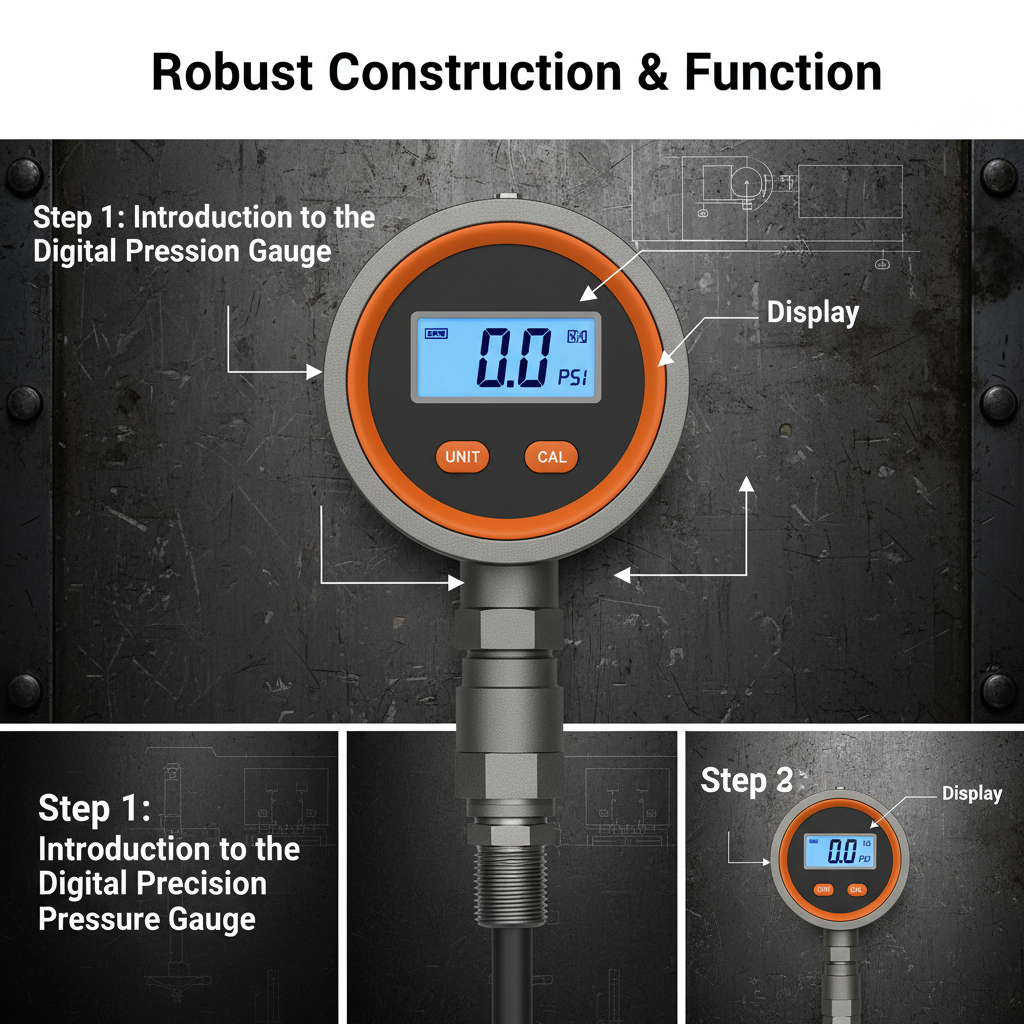
Unlike traditional mechanical gauges, digital precision pressure gauges utilize electronic sensors to detect and convert pressure into a digital signal. This signal is then processed and displayed on a digital screen, providing a clear and accurate reading. The core component is often a strain gauge, which measures the deformation of a sensing element when subjected to pressure. This deformation is directly proportional to the applied pressure, and the digital circuitry accurately translates this relationship into a quantifiable value. Modern gauges frequently include features like auto-zeroing, data logging, and multiple unit selections, enhancing their versatility and usability.
Key Advantages: Precise measurements, digital display for easy readability, data logging capabilities, multiple unit selection, and enhanced reliability compared to mechanical gauges.
Applications of Digital Precision Pressure Gauges
The versatility of digital precision pressure gauges makes them indispensable across numerous industries. In manufacturing, they ensure consistent process control, especially in hydraulic and pneumatic systems. Calibration laboratories rely on these gauges for verifying the accuracy of other instruments. Research and development teams use them for precise pressure control in experiments. Furthermore, they play a critical role in aerospace, oil and gas, and pharmaceutical industries, where accuracy and safety are paramount. The ability to log data also supports quality control and process optimization initiatives.
Industry Applications:
• Manufacturing: Process control, hydraulic systems.
• Calibration: Instrument verification and certification.
• R&D: Experimental pressure control.
• Aerospace, Oil & Gas, Pharmaceuticals: Critical process monitoring.
Digital Precision Pressure Gauge vs. Traditional Mechanical Gauges: A Comparative Analysis
While mechanical pressure gauges have served industries for decades, digital precision pressure gauges offer significant advantages. Mechanical gauges rely on physical movement of a needle, prone to parallax errors and wear and tear. Digital gauges eliminate these issues with their electronic sensors and digital displays, offering superior accuracy and long-term reliability. The added features of data logging and multiple unit selections further enhance the versatility and efficiency of digital gauges. Although mechanical gauges are generally less expensive upfront, the long-term benefits of digital precision often outweigh the initial cost.
Choosing the Right Digital Precision Pressure Gauge from SJZ Jiahang
Selecting the appropriate digital precision pressure gauge requires careful consideration of your specific application. Factors such as the pressure range, media compatibility, accuracy requirements, and environmental conditions all play a crucial role. SJZ Jiahang offers a diverse range of gauges designed to meet various needs, including options for different pressure ranges, materials (stainless steel, alloy steel), and communication protocols. Consider whether you require a gauge with data logging capabilities, a specific display type (LCD, OLED), or additional features like peak hold or min/max recording. Reviewing the specifications and consulting with the SJZ Jiahang team can ensure you select the optimal gauge for your application.
Key Considerations and Future Trends
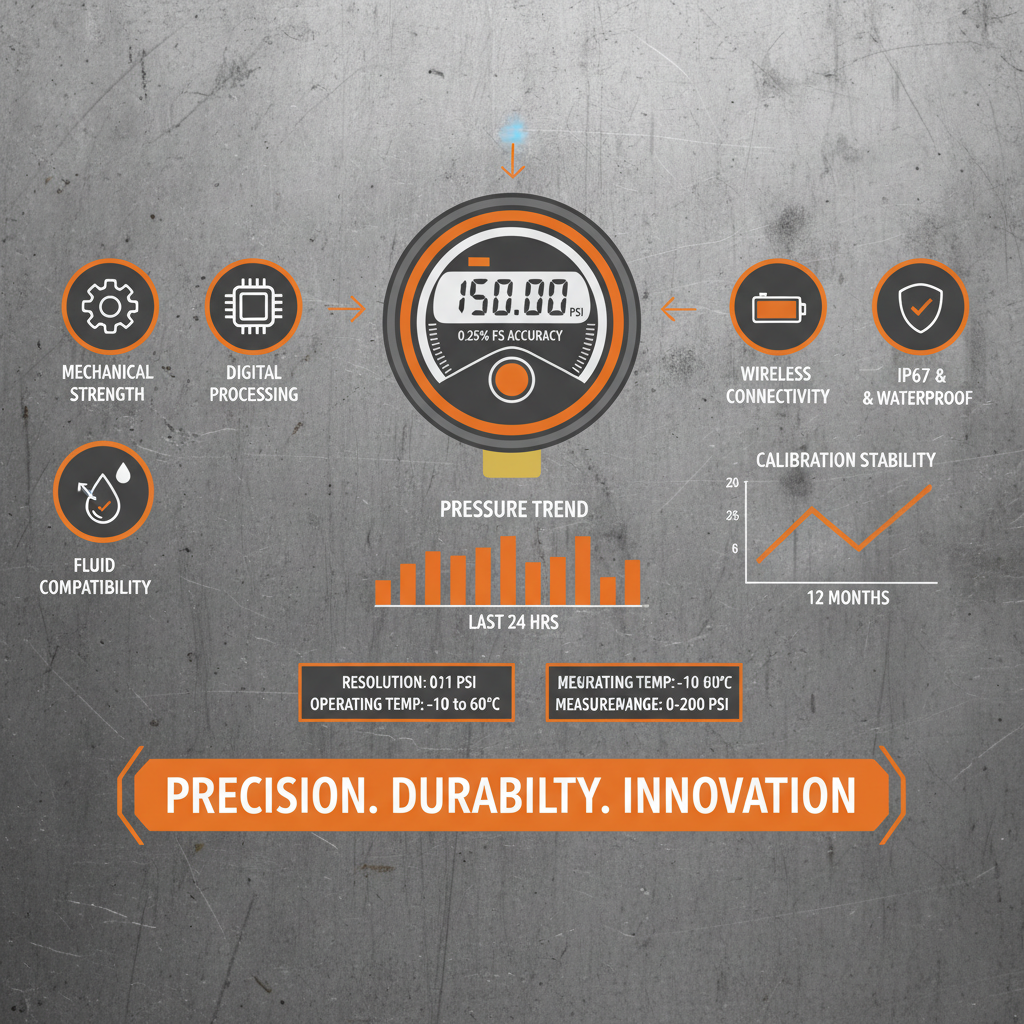
When investing in a digital precision pressure gauge, consider long-term reliability, calibration requirements, and the availability of support services. Regular calibration is essential to maintain accuracy and ensure compliance with industry standards. The emergence of IoT-enabled pressure gauges allows for remote monitoring and data analysis, offering valuable insights for process optimization. Furthermore, advancements in sensor technology are leading to even more accurate and stable gauges. SJZ Jiahang remains committed to providing innovative and high-quality pressure measurement solutions to meet the evolving needs of its customers.
Conclusion: Empowering Precision with Reliable Gauges
The digital precision pressure gauge is an essential tool for industries demanding accuracy, reliability, and efficiency. By understanding the technology, applications, and key considerations, professionals can make informed decisions and optimize their processes. SJZ Jiahang is dedicated to providing innovative and high-quality pressure measurement solutions that empower businesses to achieve their goals.
Frequently Asked Questions (FAQs)
What is the typical accuracy of a digital precision pressure gauge?
The accuracy of a digital precision pressure gauge varies depending on the model and specifications, but typically ranges from 0.1% of full scale (FS) to 0.5% FS. Some high-end gauges can achieve even higher accuracy levels. It's crucial to select a gauge with an accuracy rating that meets the requirements of your specific application. Accuracy is often specified as a percentage of the span or full-scale range. For example, a 0.1% FS accuracy means that the gauge's reading will be within 0.1% of the true value across the entire pressure range.
What factors can affect the accuracy of a digital pressure gauge?
Several factors can influence the accuracy of a digital pressure gauge. Temperature fluctuations, media compatibility, and installation orientation can all introduce errors. Ensuring proper temperature compensation, selecting a gauge compatible with the measured media, and installing the gauge in the correct orientation are crucial for maintaining accuracy. Additionally, regular calibration is essential to counteract any drift in accuracy over time. External vibrations and electromagnetic interference can also affect readings in some cases.
How often should a digital precision pressure gauge be calibrated?
The frequency of calibration depends on the application, usage intensity, and industry regulations. As a general guideline, it’s recommended to calibrate digital pressure gauges at least once a year. However, in critical applications or environments with harsh conditions, more frequent calibration may be necessary. Calibration should also be performed after any significant impact, repair, or if the gauge exhibits signs of inaccuracy. Maintaining a calibration record is essential for quality control and compliance purposes.
This is the last article
-
Understanding Digital Precision Pressure Gauge Technology and Applications
NewsFeb.24,2026
-
High-Quality Pressure Gauge on Fire Extinguisher - Reliable Water Fire Extinguisher Pressure Gauge Suppliers & Exporters
NewsJul.08,2025
-
High-Quality Water Pressure Differential and Gauge Kit Reliable Manufacturers & Competitive Quotes
NewsJul.08,2025
-
High-Precision Digital Diaphragm Pressure Gauge – Reliable Manufacturer & Competitive Quotes
NewsJul.07,2025
-
Wholesale Diaphragm Pressure Gauge Supplier - Premium Quality & Competitive Price
NewsJul.07,2025
-
Digital Diaphragm Pressure Gauge Reliable & Precise Measurement Top Manufacturers Quotes
NewsJul.06,2025
 English
  Arabic
  China
China  China (Taiwan)
  Danish
  Dutch
Dutch  French
  German
  Greek
Greek  Hindi
Hindi  Indonesian
  Italian
  Japanese
  Korean
  Latin
Latin  Polish
  Portuguese
  Russian
  Spanish
  Turkish