

Nov . 19, 2024 08:38 Back to list
diaphragm and capsule pressure gauges quotes
Understanding Diaphragm and Capsule Pressure Gauges A Comprehensive Overview
In various industrial and scientific applications, precise measurement of pressure is crucial for ensuring the efficiency and safety of processes. Among the many types of pressure measurement devices, diaphragm and capsule pressure gauges are two commonly employed instruments. This article will explore their design, operating principles, applications, advantages, and limitations, shedding light on why they are essential tools in various settings.
What are Diaphragm and Capsule Pressure Gauges?
Both diaphragm and capsule pressure gauges are types of mechanical pressure sensors that translate pressure changes into a mechanical displacement, which can then be read on a dial face or digital display. The primary difference between the two lies in their design and the way they measure pressure.
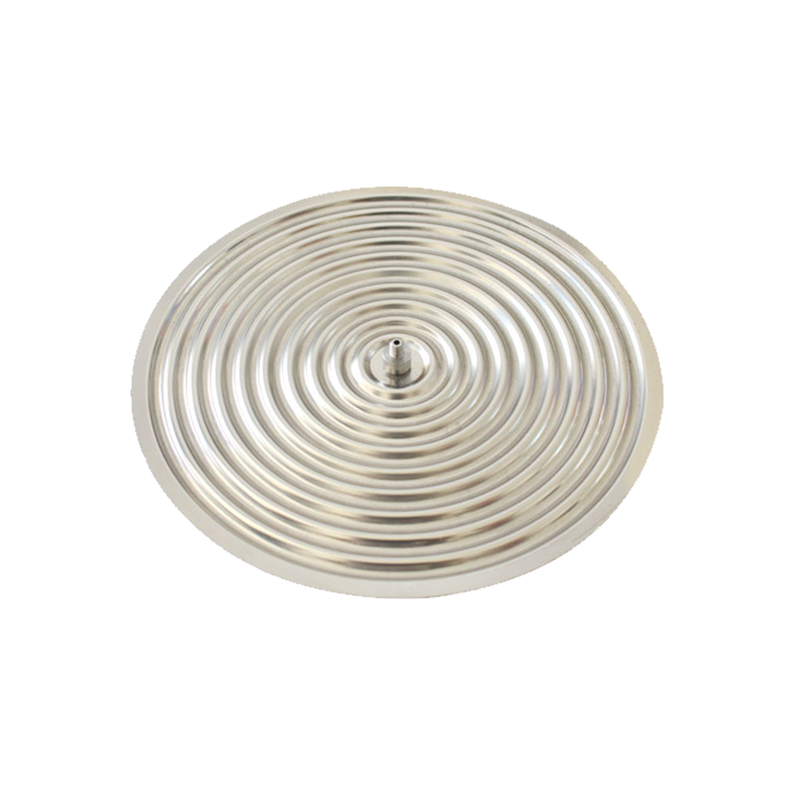
Diaphragm Pressure Gauges typically utilize a flexible diaphragm that separates the pressure sensing chamber from the environment. When pressure is applied, the diaphragm bends or deflects. This deflection is then transferred to a mechanical movement, often with the aid of a system of levers, which translates the movement into a pressure reading on the gauge's dial. Diaphragm gauges are capable of measuring both positive and negative pressures, making them versatile for a variety of applications.
Capsule Pressure Gauges, on the other hand, consist of two or more convoluted (or chambered) capsules. When pressure is applied, the capsules expand or contract. Similar to diaphragm gauges, this movement is translated into a reading on the dial. Capsule gauges are particularly well-suited for measuring low pressures, such as in HVAC systems or laboratory environments.
Operating Principles
The operating principle of both types of gauges relies on the physical displacement caused by pressure changes.
- In diaphragm gauges, the diaphragm material—often made from stainless steel, bronze, or other elastic materials—allows for precise movement. The deflection caused by the pressure creates a linear or rotational movement that can be calibrated to correspond to specific pressure readings.
- In capsule gauges, the expansion of the capsules takes advantage of the elasticity of the materials used, usually metallic. These materials allow the capsules to expand or contract in response to pressure variations, with the movement being linked mechanically to a pointer that indicates the pressure level on a scale.
Applications
Diaphragm and capsule pressure gauges are prevalent in a variety of fields
diaphragm and capsule pressure gauges quotes
- Industrial Applications Used in process controls, hydraulic systems, and gas measurement systems, diaphragm gauges are particularly well-suited for environments where high pressures are involved, including oil and gas processing. - HVAC Systems Capsule gauges are commonly used in HVAC (heating, ventilation, and air conditioning) systems for measuring low pressures to maintain efficient and safe operation levels.
- Laboratory Settings Both types of gauges assist scientists and researchers in maintaining accurate pressure readings to ensure experimental integrity.
Advantages
Each of these gauges offers distinct advantages
- Diaphragm Gauges They are robust and capable of withstanding high pressure and fluctuating conditions without failure. Their generally simple design leads to reliable performance and straightforward maintenance.
- Capsule Gauges With high sensitivity to low pressure changes, they provide accurate readings in delicate applications. Their compact form factor often allows for easy installation in systems where space is constrained.
Limitations
However, there are limitations to consider
- Diaphragm gauges may suffer from hysteresis and non-linearity if over-pressurized, potentially leading to inaccurate readings. - Capsule gauges, while precise at low pressures, may not be suitable or durable in high-pressure environments due to their design limitations.
Conclusion
Diaphragm and capsule pressure gauges are invaluable tools for accurate pressure measurement across multiple industries. Understanding their design, operation, and respective advantages and limitations can help professionals select the appropriate gauge for their specific application. As technology advances, we can expect further innovations in these instruments, providing even greater precision and reliability in pressure measurement.
-
Understanding Digital Precision Pressure Gauge Technology and Applications
NewsFeb.24,2026
-
High-Quality Pressure Gauge on Fire Extinguisher - Reliable Water Fire Extinguisher Pressure Gauge Suppliers & Exporters
NewsJul.08,2025
-
High-Quality Water Pressure Differential and Gauge Kit Reliable Manufacturers & Competitive Quotes
NewsJul.08,2025
-
High-Precision Digital Diaphragm Pressure Gauge – Reliable Manufacturer & Competitive Quotes
NewsJul.07,2025
-
Wholesale Diaphragm Pressure Gauge Supplier - Premium Quality & Competitive Price
NewsJul.07,2025
-
Digital Diaphragm Pressure Gauge Reliable & Precise Measurement Top Manufacturers Quotes
NewsJul.06,2025
 English
  Arabic
  China
China  China (Taiwan)
  Danish
  Dutch
Dutch  French
  German
  Greek
Greek  Hindi
Hindi  Indonesian
  Italian
  Japanese
  Korean
  Latin
Latin  Polish
  Portuguese
  Russian
  Spanish
  Turkish