

Oct . 19, 2024 15:01 Back to list
analogue differential pressure gauge company
Understanding Analogue Differential Pressure Gauges
Differential pressure gauges play a critical role in various industrial applications, measuring the difference in pressure between two points within a system. Among the different types available, analogue differential pressure gauges hold a significant position due to their simplicity, reliability, and ease of use. This article explores the features, applications, and advantages of analogue differential pressure gauges, shedding light on why they remain a preferred choice in numerous industries.
What is an Analogue Differential Pressure Gauge?
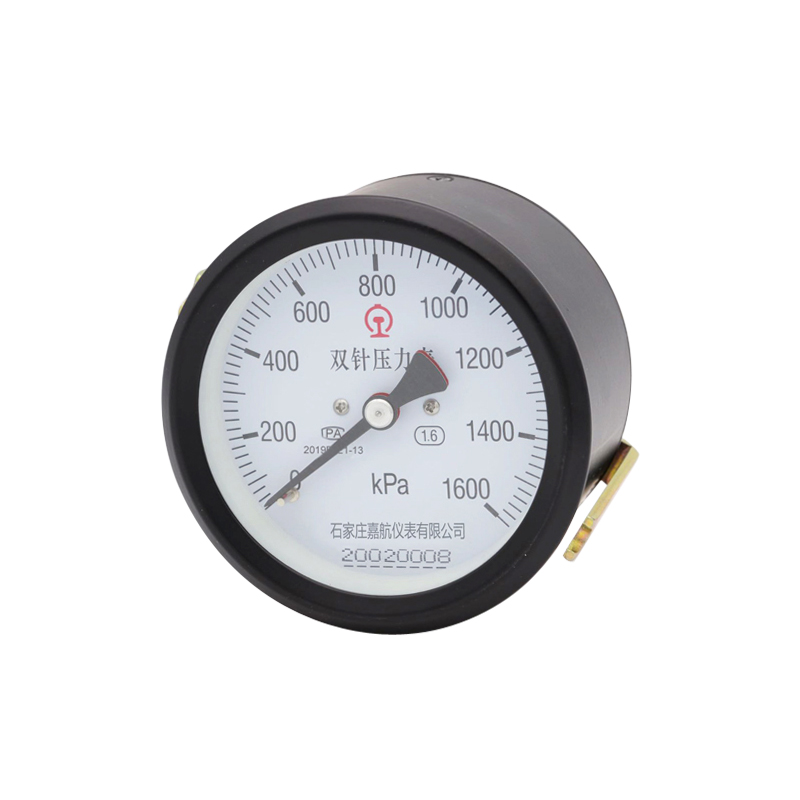
An analogue differential pressure gauge is a mechanical device that visually displays the pressure difference between two points in a system through a dial and needle interface. These gauges typically utilize a Bourdon tube or diaphragm mechanism to translate pressure differences into rotational movement, allowing users to observe variations on a calibrated scale. Unlike digital gauges, analogue models can provide immediate readings without the need for power, making them dependable in various environments.
Features and Components
The fundamental components of an analogue differential pressure gauge include
1. Bourdon Tube or Diaphragm This is the sensing element that responds to pressure variations, converting them into motion. 2. Pointer and Dial The pointer moves over a dial marked with calibrated readings, allowing operators to easily interpret pressure differences. 3. Connection Ports These are the inlet and outlet points where pressure fluid enters the gauge. 4. Case The casing protects the internal components from environmental factors such as moisture and dust, ensuring durability.
These features combine to deliver accurate, real-time readings essential for process monitoring and control.
Applications of Analogue Differential Pressure Gauges
Analogue differential pressure gauges are widely used across various industries, including
analogue differential pressure gauge company
- HVAC Systems They monitor airflow across filters and ductwork, ensuring efficient operation and identifying blockages. - Hydraulic Systems In hydraulic machines, these gauges measure pressure differentials to ensure smooth functioning and optimize performance. - Oil and Gas Industry They are crucial for monitoring pressure differences in pipelines and tanks, aiding in leak detection and maintenance. - Water Treatment Facilities They help maintain optimal pressure in filtration systems, ensuring the quality and safety of treated water.
These applications highlight the versatility of analogue differential pressure gauges in enhancing operational efficiency and safety in complex systems.
Advantages of Analogue Differential Pressure Gauges
1. Simplicity The straightforward design and operation of analogue gauges make them user-friendly. Operators can easily observe and interpret readings without specialized training. 2. No Power Requirement Unlike digital counterparts, analogue gauges do not require electrical power, allowing them to function in remote or hazardous locations where power supply may be unreliable.
3. Durability Analogue gauges are typically robust and capable of withstanding harsh industrial conditions, ensuring a long service life with minimal maintenance.
4. Cost-Effectiveness Generally, analogue gauges are less expensive to purchase and maintain than digital alternatives, making them an economical choice for many organizations.
5. Immediate Readings The mechanism provides instantaneous readings, which is crucial for processes where timely decision-making is necessary.
Conclusion
While digital technologies continue to evolve, analogue differential pressure gauges maintain their relevance in various industrial applications. Their simplicity, reliability, and cost-effectiveness ensure that they remain an integral part of pressure measurement systems. As industries increasingly seek efficient monitoring solutions, analogue differential pressure gauges will undoubtedly retain their place, providing valuable insights into the dynamics of pressure regulation. Whether in HVAC systems, oil and gas operations, or water treatment facilities, these gauges continue to be indispensable tools for engineers and operators alike.
-
High-Quality Pressure Gauge on Fire Extinguisher - Reliable Water Fire Extinguisher Pressure Gauge Suppliers & Exporters
NewsJul.08,2025
-
High-Quality Water Pressure Differential and Gauge Kit Reliable Manufacturers & Competitive Quotes
NewsJul.08,2025
-
High-Precision Digital Diaphragm Pressure Gauge – Reliable Manufacturer & Competitive Quotes
NewsJul.07,2025
-
Wholesale Diaphragm Pressure Gauge Supplier - Premium Quality & Competitive Price
NewsJul.07,2025
-
Digital Diaphragm Pressure Gauge Reliable & Precise Measurement Top Manufacturers Quotes
NewsJul.06,2025
-
High Accuracy Piston Type Differential Pressure Gauge - Reliable Manufacturers & Competitive Quotes
NewsJul.06,2025
 English
  Arabic
  China
China  China (Taiwan)
  Danish
  Dutch
Dutch  French
  German
  Greek
Greek  Hindi
Hindi  Indonesian
  Italian
  Japanese
  Korean
  Latin
Latin  Polish
  Portuguese
  Russian
  Spanish
  Turkish